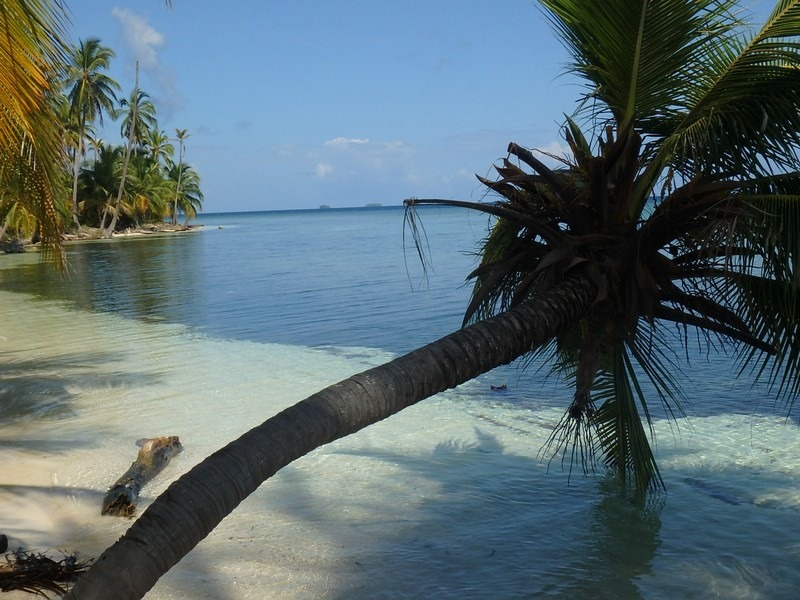
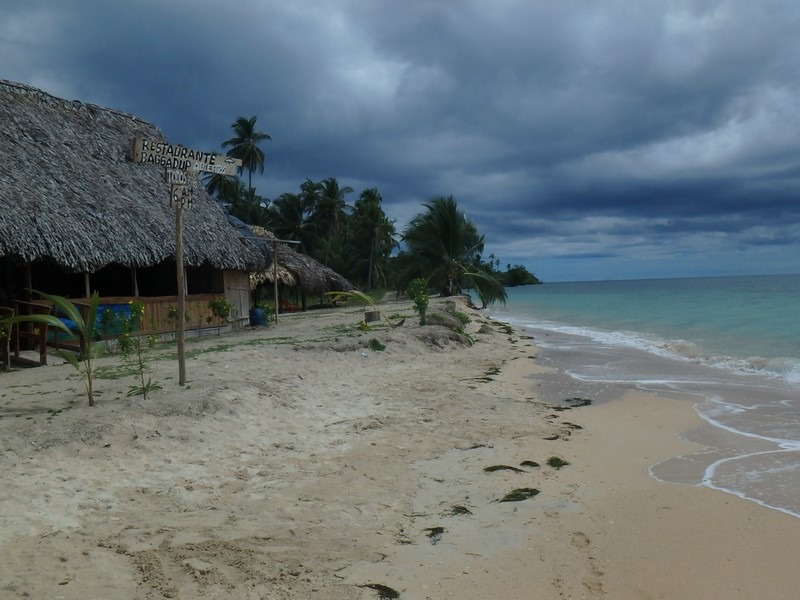
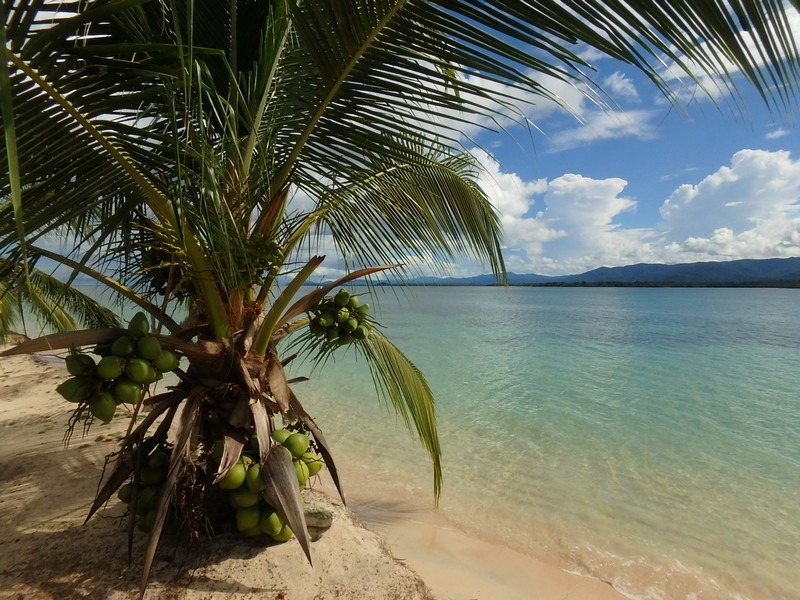
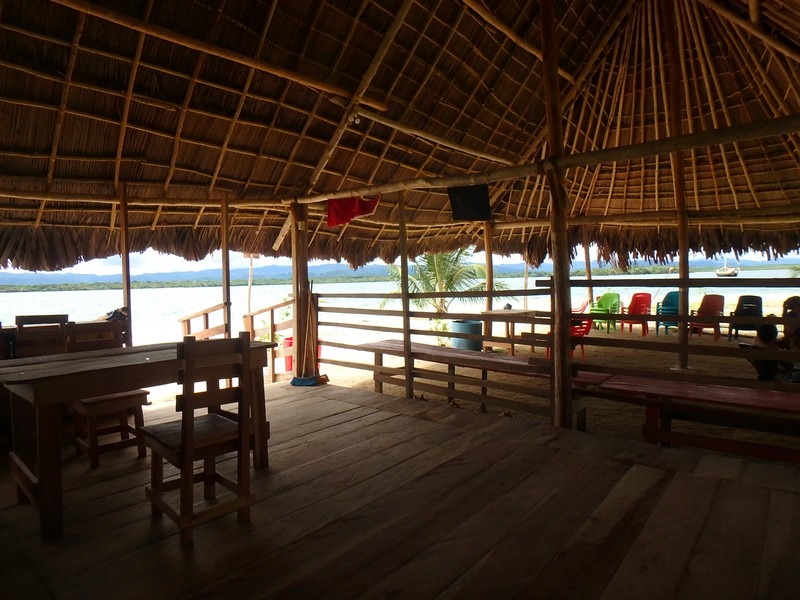
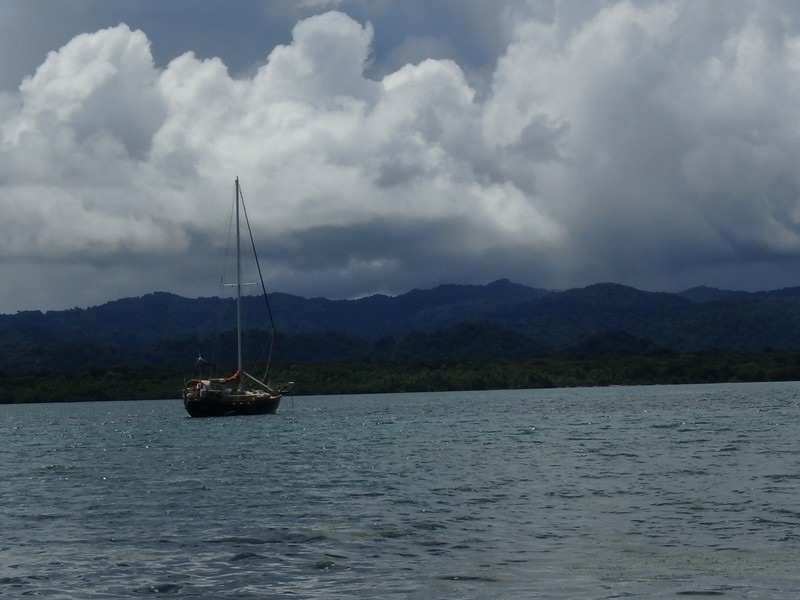
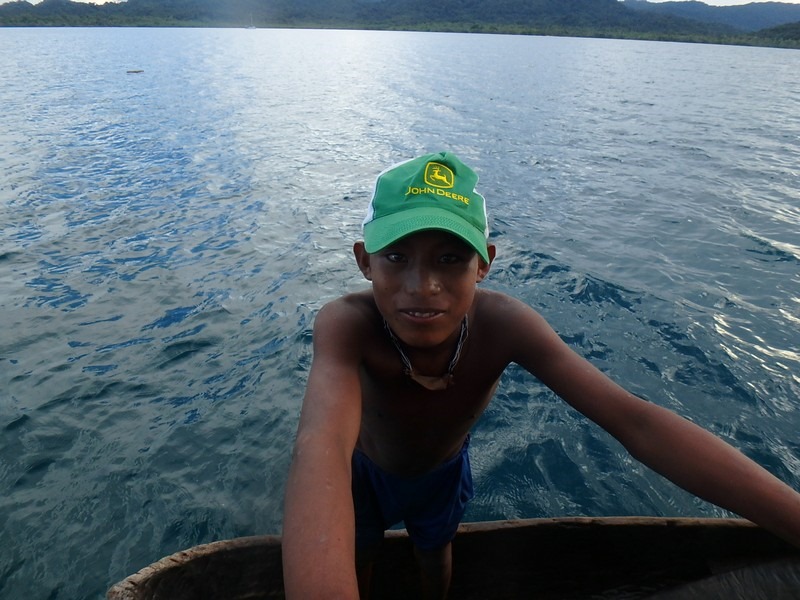
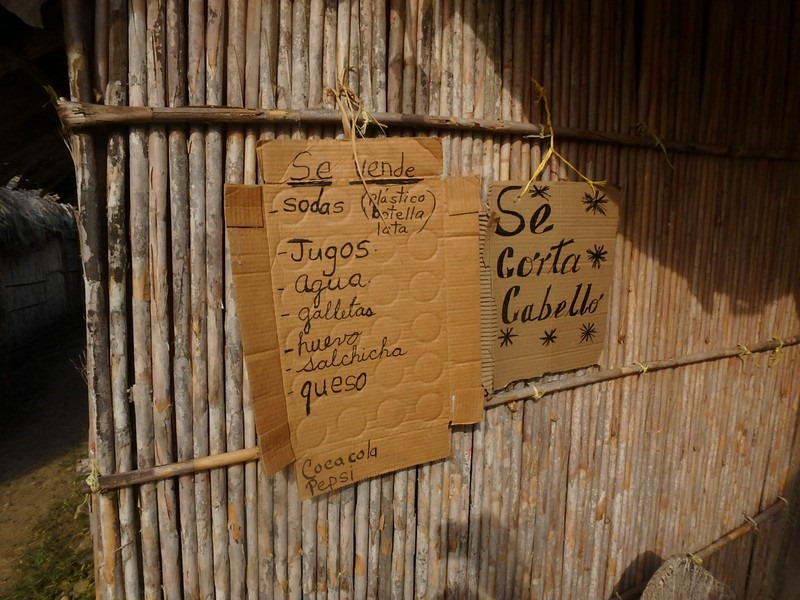
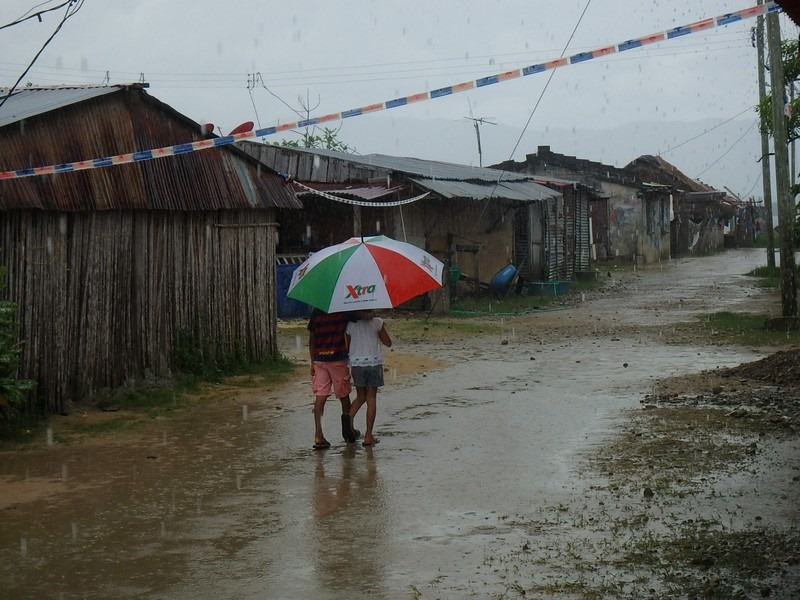
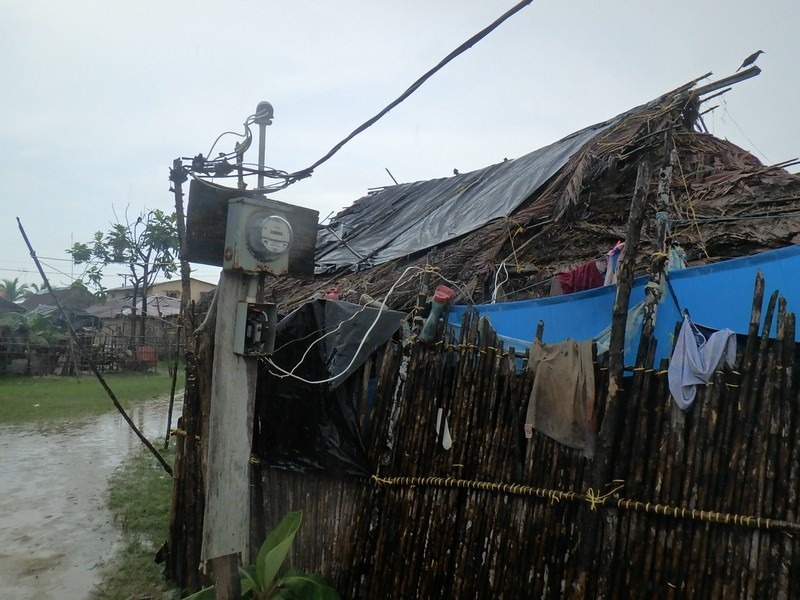
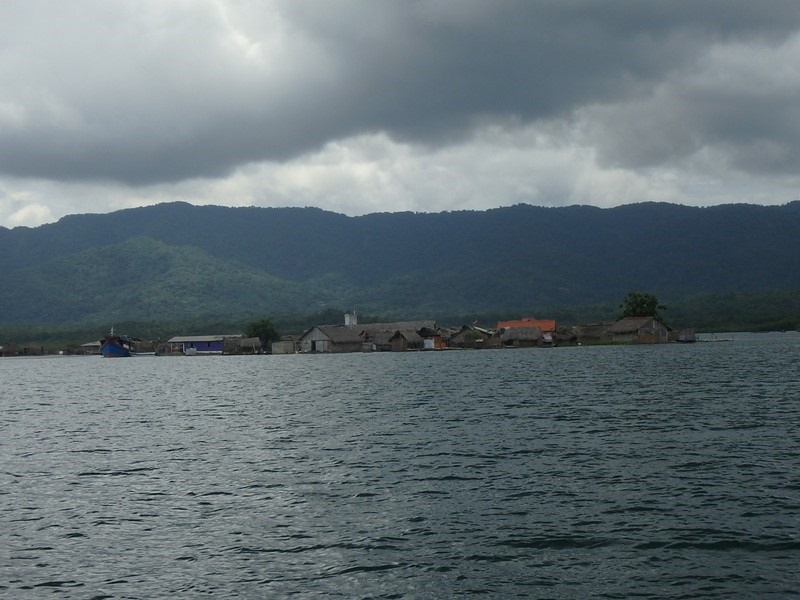
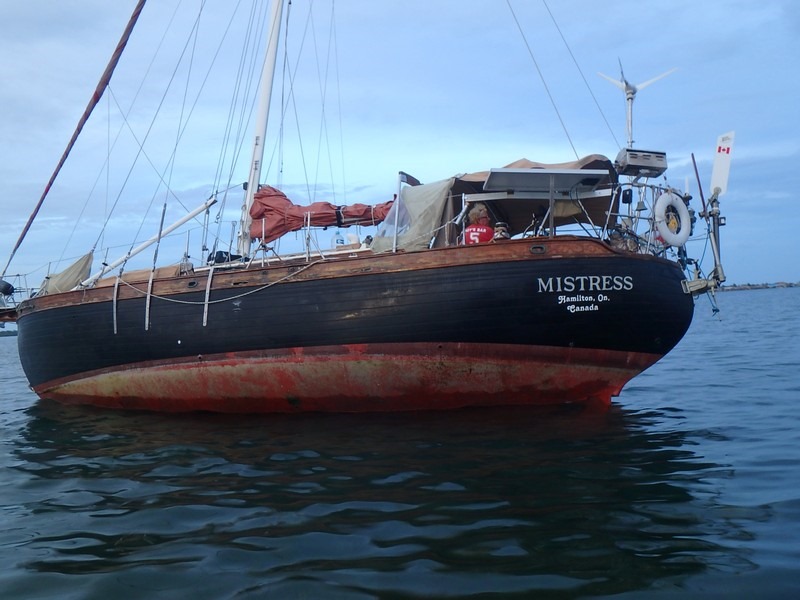
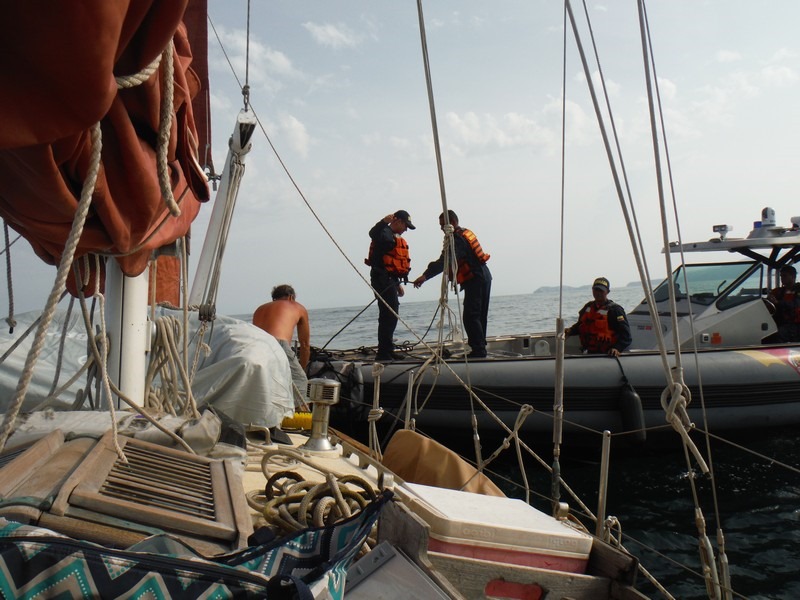
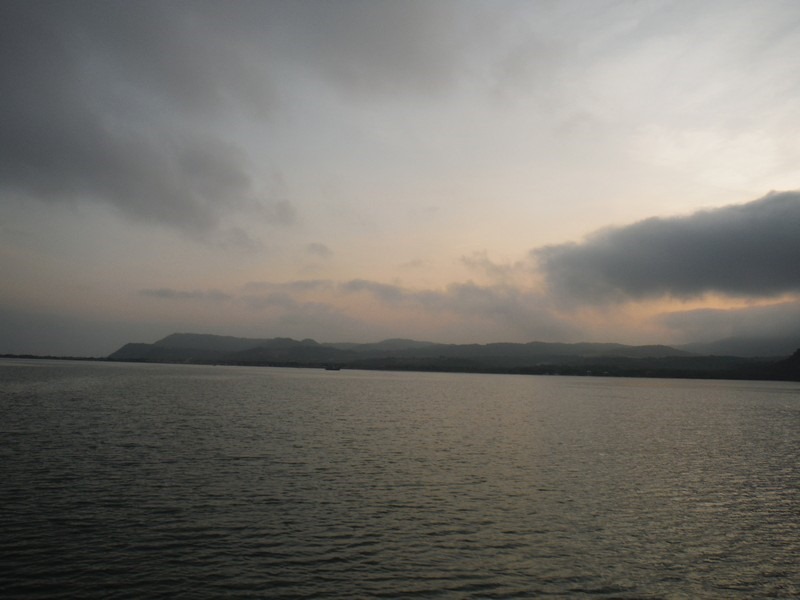
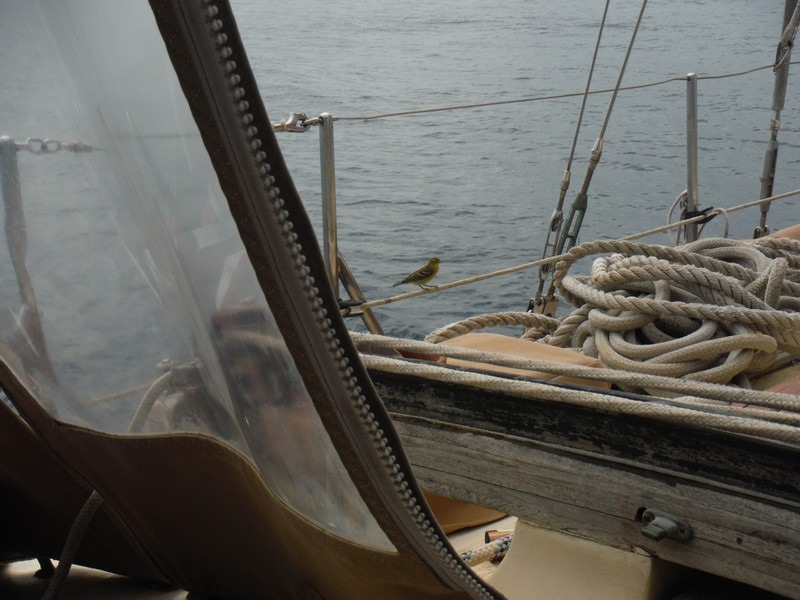
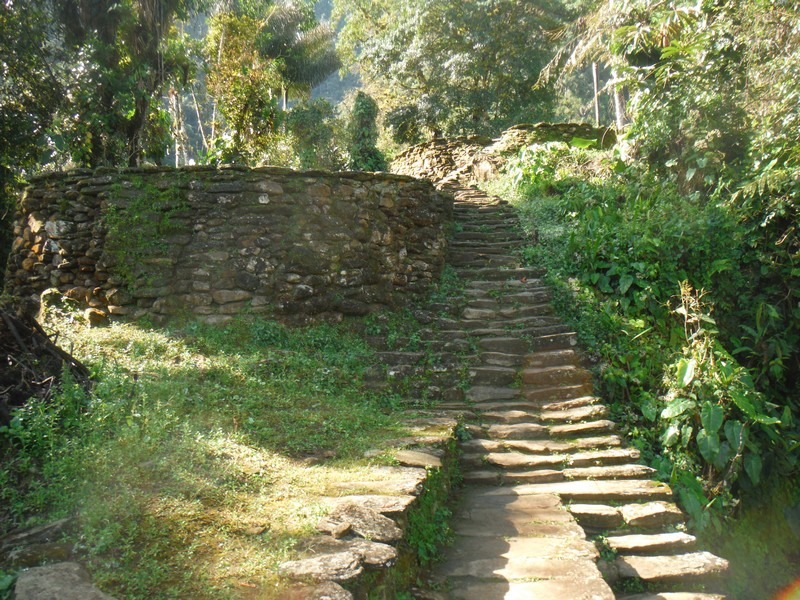
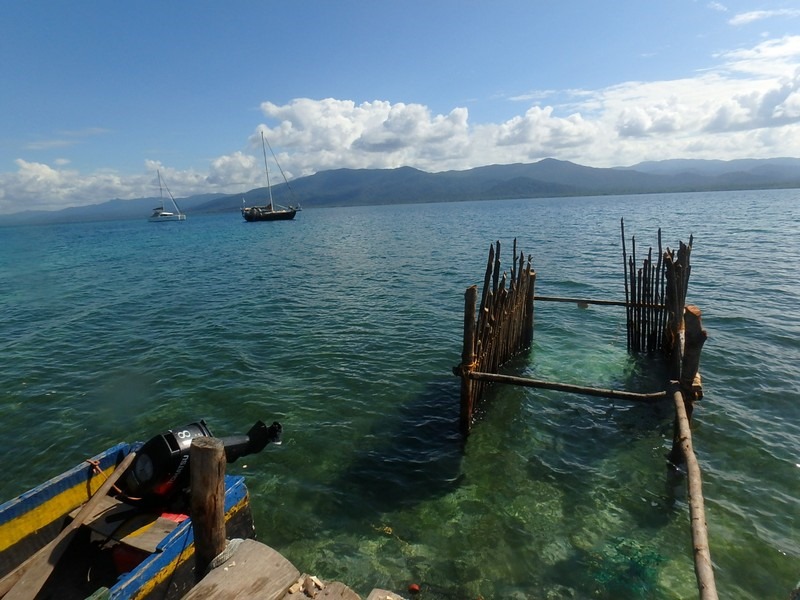
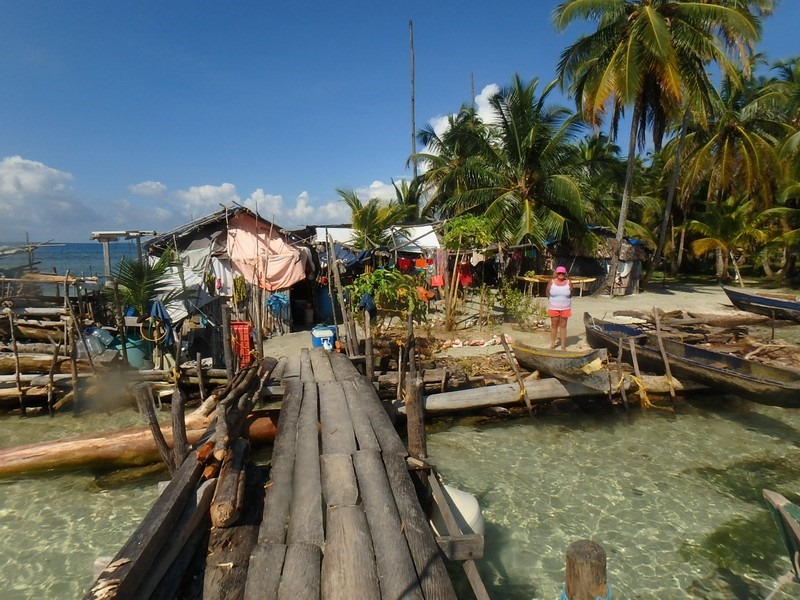
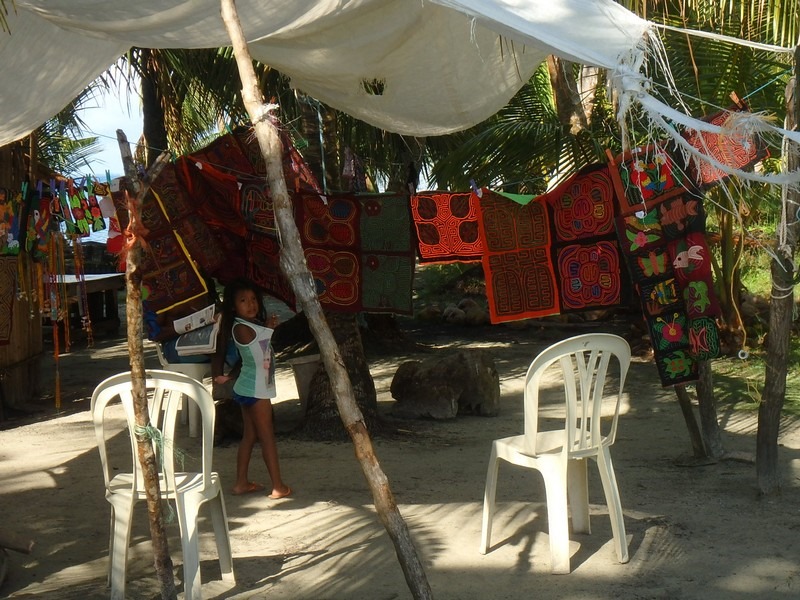
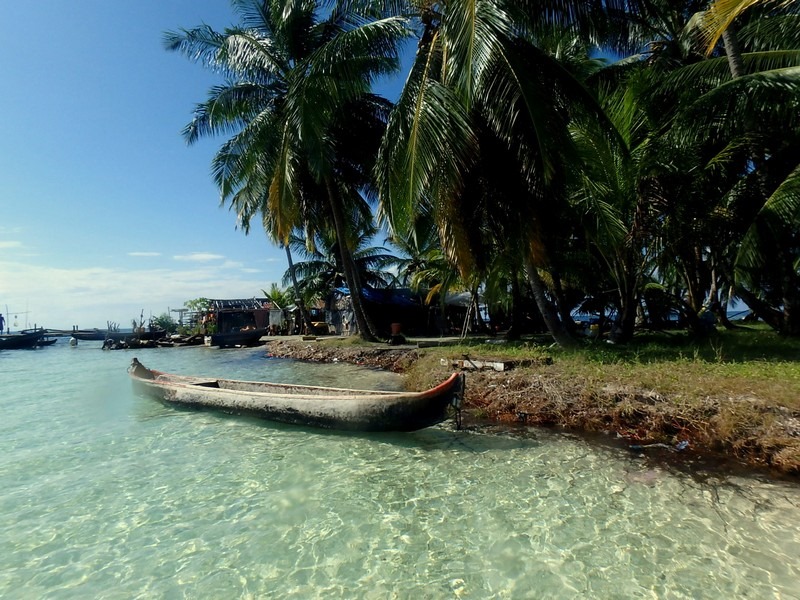
The Naguargandup Cays are a beautiful chain of mostly uninhabited islets scattered along a six mile long barrier reef, they are situated close to the mainland the water is well protected and calm. We had the opportunity of spending more then a week here in this little piece of paradise. We sailed to the small island of Morbedup, better known as Cambombia, meaning conch one of the food staples.As we were lowering the anchor an “ulu”, canoe to offer help and welcome us to the community.There are only two cousins with families who had huts at either end of the island. Approx. 10 adults and six children. A few of the children were away during the week on a bigger island to attend school. The island is about half a mile circumference, covered in coconut trees, with no electricity. The men rise early before Sun-up, leave in their ulu’s to go fishing, or collect lobsters and conch. Others days are spent travelling to the mainland where they have farm plots, that grow bananas, breadfruit, coconuts, yucca, pineapples. and or collect fire wood. The only income earned is by selling things to the visiting cruisers. The women offer their beautiful Molas, which are Panama’s most famous handicraft, and are appreciated in most countries. They are intricately made by sewing and cutting different layers of colourful cloth. Each Mola is unique, and they usually show abstracted forms of birds, animals, or marine life. Some take almost a month to complete.They also sell fruit, or offer seafood meals served on a large table beside the huts, Lobster, fish, or conch with rice and plantains and fresh baked bread less, then ten dollars.


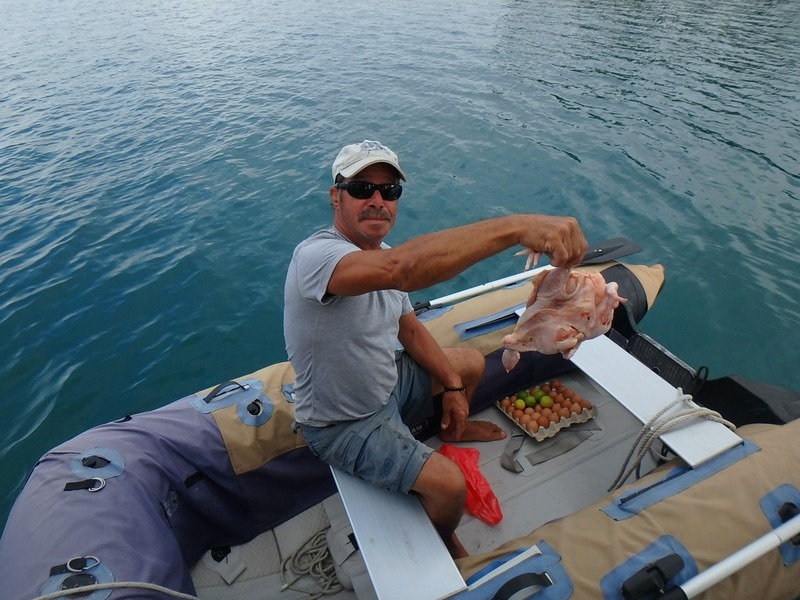
The trading boats stop by loaded down with goods to sell. The oldest women on the island, which was Grandma, is always the first out on to the small dock to haggle with the men over prices, she bought eggs, limes, tomatoes, frozen chicken, and cooking oil. I couldn’t resist getting in on the action, whole bird, insides, head and all…..$2.


The islands here are being threatened by 2 major problems……Global Warming and Plastic.
The oceans are rising and washing away the shoreline of the low-lying islands, trees falling into the water.
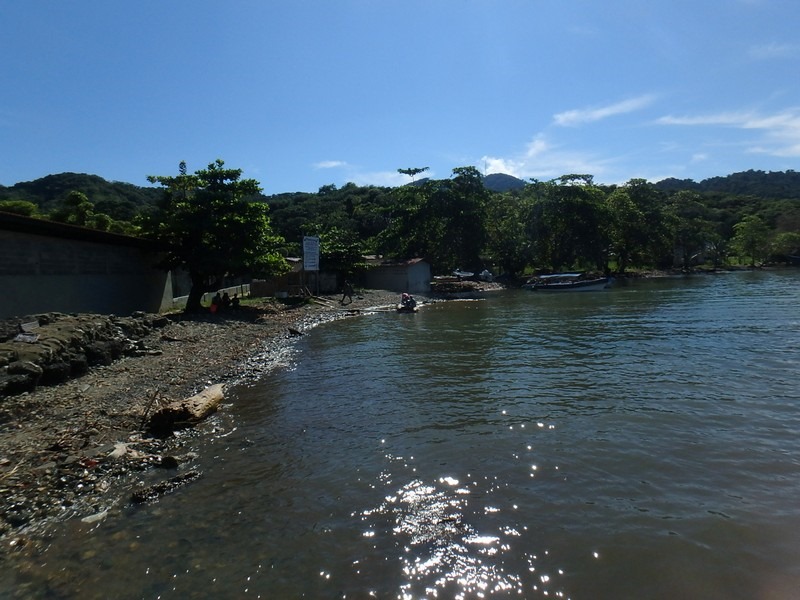
The other problem, and one we can make a difference with, is to, stop using so much plastic. Some beaches have piles of various objects, 50% water bottles that have ended up in the water. With nobody recycling, it will remain an eyesore for a long time. Burning it is not an option. Imagine this in your own backyard, with nothing you can do about it.